
 EN
EN
Quick Links

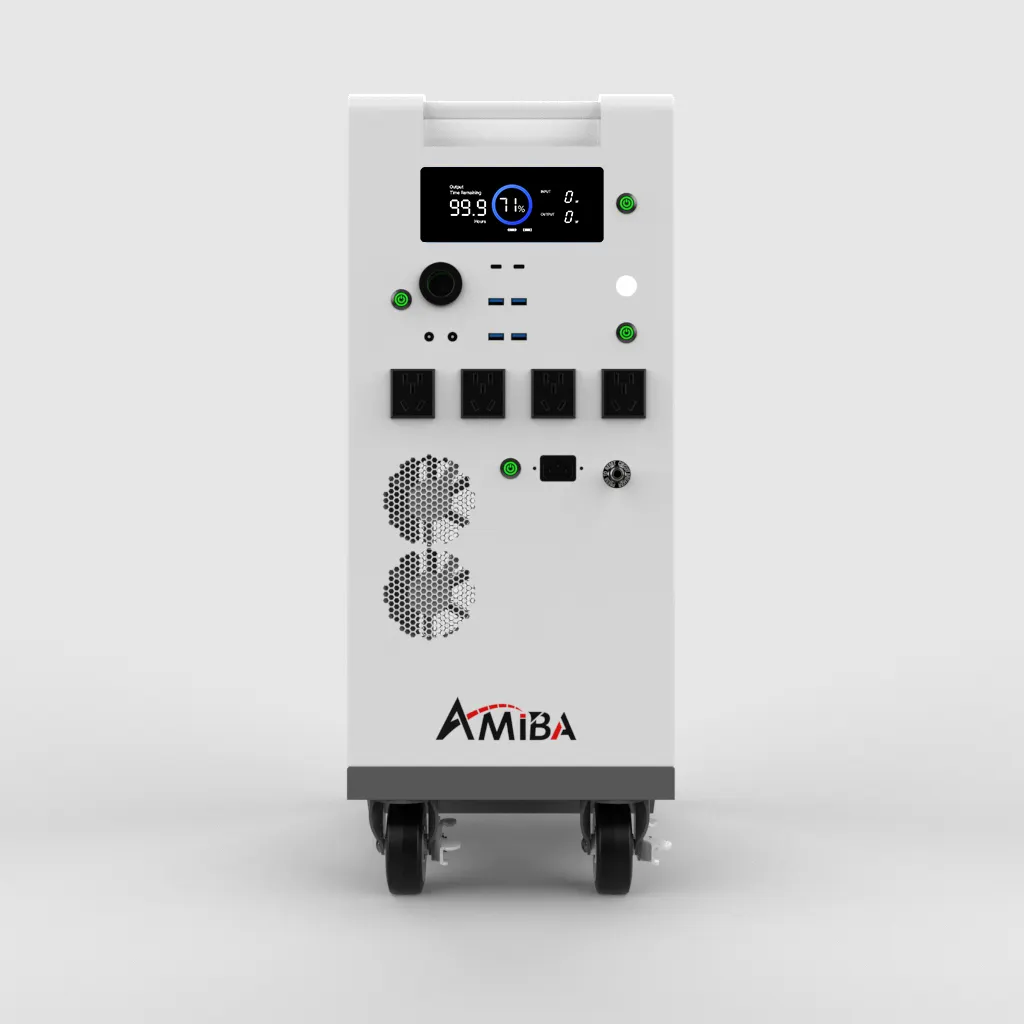
The cycle life of a battery basically tells us how many times we can fully charge and discharge it before it starts losing significant capacity, usually when it drops below 80% of what it originally held. Think about it this way: if your phone battery goes from 100% down to empty and back up again, that's one full cycle. But even partial discharges count too. Like those two times you let your laptop run down halfway during work meetings? That adds up to one full cycle in the eyes of battery scientists. Why does this matter so much? Well, batteries with longer cycle lives simply last longer in the field, which means fewer replacements and lower costs over time. Take lithium iron phosphate batteries as an example they generally last anywhere from 3,000 to 6,000 cycles, which puts them way ahead of traditional lead-acid batteries by at least three or four times. When people take care to follow proper charging habits, something interesting happens inside these batteries. The chemical reactions stay stable for longer periods, reducing problems like cracks forming on electrodes, excessive growth of protective layers on surfaces, and breakdowns in the liquid components that carry electricity through the system.
Depth of Discharge (DoD) reflects the percentage of battery capacity drawn per cycle. Critically, degradation scales nonlinearly with DoD: a 100% discharge imposes roughly three times more mechanical and chemical stress than a 50% DoD. This accelerates electrode particle fracture and uncontrolled solid electrolyte interface (SEI) growth. To extend lifespan:
Shallower cycling delivers dramatic returns—some LiFePO₄ systems achieve 10,000+ cycles at 50% DoD versus ~3,000 at 100% DoD.
A high-performance Battery Management System (BMS) actively extends battery life through three interdependent functions:
Together, these functions counteract the dominant aging mechanisms, allowing well-managed systems to exceed rated cycle life by 20–40%.
When BMS safeguards fail, irreversible damage cascades rapidly:
A single critical failure can slash total cycle life by half—or trigger replacement costs exceeding $740,000 for utility-scale installations (Ponemon Institute, 2023). Robust BMS architectures mitigate risk via redundant sensors, hardware-level disconnects, and response times under 10 ms.
SoC estimation accuracy within ±3% is essential—not optional—for preserving energy storage battery longevity. Errors beyond this threshold force repeated operation outside the electrochemically safe zone, increasing degradation rates by up to 30% in accelerated aging models. The impact is quantifiable:
| SoC Estimation Error | Operational Consequence | Typical Cycle Life Outcome |
|---|---|---|
| ±3% | Consistent 20–80% SoC operation | 7,000+ cycles (LiFePO₄) |
| > ±5% | Chronic undercharge/overcharge events | ≈4,000 cycles |
The best battery management systems get their accuracy from something called fused coulomb counting combined with adaptive Kalman filters. These are basically smart algorithms that adjust on the fly when things change like temperature fluctuations, battery aging effects, and sudden power demands. On the flip side, simpler systems that just measure voltage don't handle these changes well at all. They tend to lose track over time, drifting by more than 8 percent after around 100 charge cycles. This kind of error builds up gradually and leads to real problems down the road, with most batteries showing significant capacity drops within about 18 months of operation.
Persistent SoC calibration drift is the clearest signal of inadequate BMS design. Budget systems frequently exhibit >5% SoC variance after just 50 cycles due to:
When batteries silently lose track of their charge levels, they often end up getting discharged too deeply before anyone notices something's wrong. Looking at real-world installations in homes connected to the power grid, these kinds of battery management systems tend to fail about 2.3 times more frequently than they should. Most of these early failures come down to problems with lithium buildup on electrodes and those pesky little metal growths called dendrites causing short circuits inside. The good news is there are better options out there. Systems worth trusting actually run regular self-checks and validate readings at multiple points throughout operation. This keeps the state of charge measurements within roughly 2.5% accuracy for most of what we'd expect from a typical battery lifespan, which covers around 80% of when people actually need reliable performance from their storage systems.